AYURVEDA 101: Understand your Constitution

Maybe you have heard of Ayurveda or know the basics but don’t quite understand how it works and how it relates to you?

Here are some fundamentals to get you started so you can better understand your self  – your body, mind and your tendencies … and also better understand others in your life.


What is Ayurveda?

Ayurveda is an ancient form of natural medicine originating from India thousands of years ago.  Translated from Sanskrit it can be called ‘Science of Life’. More specifically it means knowledge of holistic healing or longevity, with the idea that everything is interrelated, yet still unique.  Ayurveda is applied on an individual basis and able to be used in people’s everyday lives using diet, massage & oils, exercise & yoga, herbs and lifestyle.

It has been said that Yoga and Ayurveda are like brother and sister systems – Yoga the masculine and active system and Ayurveda the feminine and nurturing system, although both systems contain qualities of both masculine and feminine. Together they work well in balancing the body, mind and spirit and establishing ongoing health by creating a balanced and healthy lifestyle suited to each individual.


Your Ayurvedic Constitution

The way in which Ayurveda determines your individual nature is using natural elements or forces that exist both in us as individuals and in our environment as Mother Nature. 

The three main elemental forces (or doshas) are:

  1. VATA – movement (Ether & Air)
  2. PITTA – transformation (mostly Fire + some water)
  3. KAPHA – cohesion  (Earth + Water) 

See the table below for the qualities, the elements and how imbalances show up for each dosha

VATA

PITTA

KAPHA

Qualities Cold, light, dry Warm, oily, light Cool, heavy, oily
Made of: Ether + Air Fire + bit of water Earth + Water
Imbalances show as Nervous, anxious, dry skin, hair, constipated, can’t keep routine including eating & sleeping Overheated, red rashes, diarreah, inflammation, angry emotions such as frustration or irritability. Overweight, diabetes, depressed, respiratory symptoms, overly possessive or stubborn

Do you relate to any of these qualities or imbalances? Perhaps you resonate strongly with 1 of the doshas and it’s imbalances or perhaps with 2 or even 3.  We are all made up all 3 doshas and 5 elements, just in varying amounts.

For instance, you may have 80% Pitta and the remaining 20% in Vata and Kapha.

Or Alternatively, you may have 40% Vata, 30% Pitta and 30% Kapha .. this is less likely but still possible.


How to Balance your Dosha

So you may be wondering ok .. so now what?

They key is to go with the qualities or the imbalances that show up the strongest and address these qualities first.

Here are some basic ways to bring balance into your body and your life using some very simple principles and natural remedies..


VATA

PITTA

KAPHA

Remedies  

Warm, heavy & oily

– Warm, cooked lightly spiced foods such as soupls, stews and casseroles

– Warm bath, oil massage, gentle daily routine

Cool, heavy & dry

– Raw, cooling foods, fruits, salad such as coconut, cucumber

– Swimming, cool water, moon bathing


Warm, light & dry

– Roasted, baked & dried foods, general spices & chilli

– Vigorous & heating, morning exercise, sun bathing ok


If you want to clearer on your dosha type & how you can use this information in your life…


Take this Free Quiz

AYURVEDIC CAREER QUIZ

And find out the best career or job options based on your

Ayurvedic Personality Type


For more information about Ayurveda or having a private session contact Emma via email or Book a free chat. 

__________________________________________________________


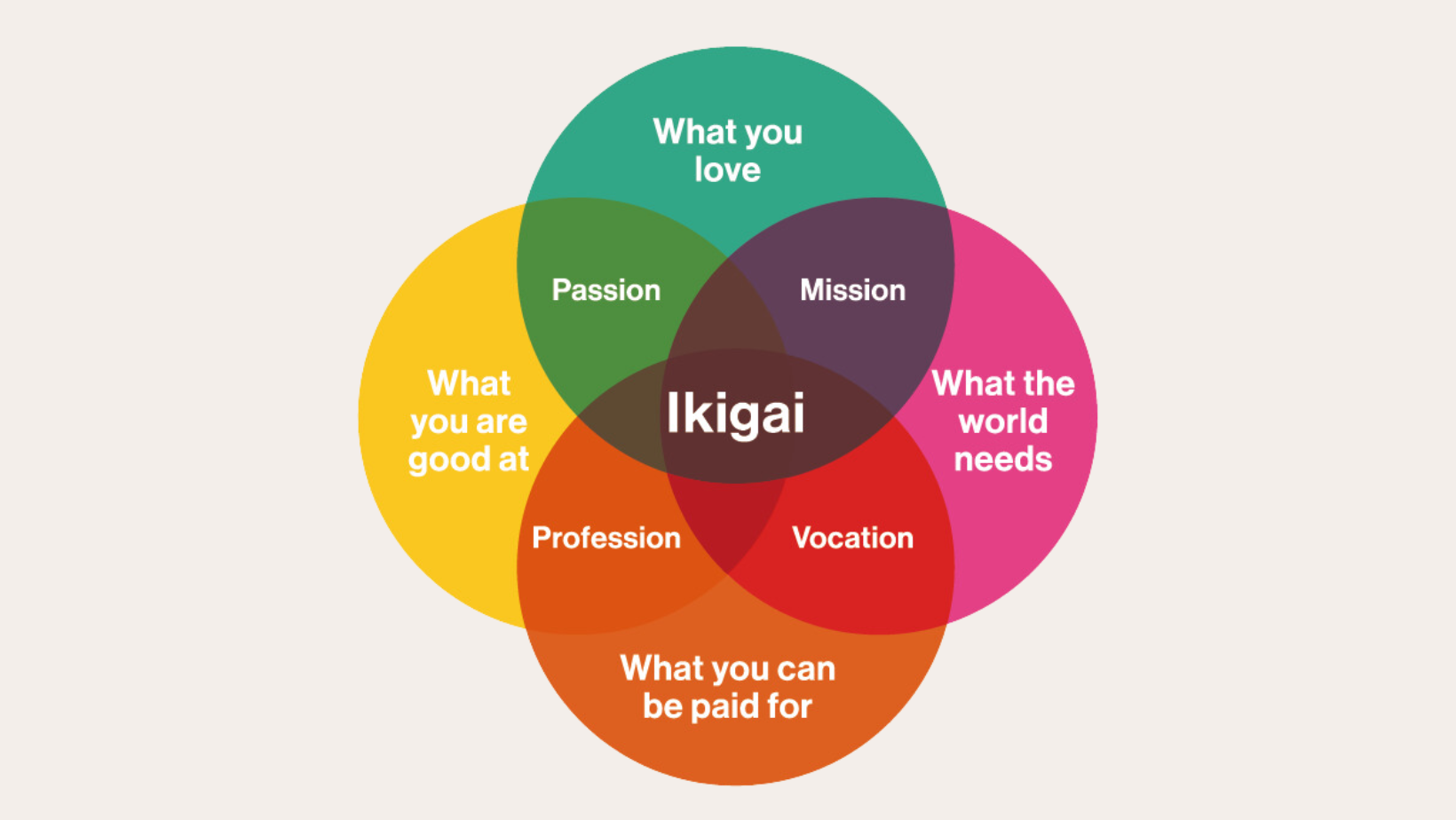
IKIGAI & THE 4 PILLARS OF PURPOSE


Ikigai is one of my favourite Japanese inspirational ideas, which translates as “reason for being’ or ‘purpose for life’ which is similar to the concept of Dharma  or ‘right path’.

I believe the concept of Ikigai is becoming increasingly relevant as many of us are questioning the tumultuous world we are living in and therefore, reflecting on the meaning & purpose of our life and work.

  • Where we want to place ourself in the world?
  • The meaning of our Life or life path
  • The fulfillment of our work 
  • How can I be of service to others?
  • Our ‘reason for being’ – or our “life purpose’

Ikigai encourages us to reflect on and gives us permission to act on these longings or natural urges that are waiting to be expressed and shared with the world.


To help you get clearer on your ‘reason for life’ you can answer these questions based on

The 4 Pillars of Ikigai:

1.PASSION:  What do you Love doing?

– What excites you,  makes you feel alive & in the flow?

– What sparks enthusiasm so you want to get out of bed in the morning?


2. PROFESSION:  What are you are good at

– What are your skills, talents & natural abilities?

– What do i excel at so I can bring my best self forward 


3. MISSION:  What does the world need?

– What gifts do you have that others could benefit from

– How could I contribute to society in a positive way?


4. VOCATION:  What can you be paid for?

– What you do needs to sustain you financially

What fulfilling work could I do that aligns with these skills, passions & abilities?


Some other questions to ask may be:

Do you wake in the morning with a longing to bring ‘SOMETHING’ TO LIFE?

Do you feel passionate about something you want to create?

Is there something or someone you want to MAKE A STAND FOR?


I have been reflecting on my Ikigai and I came up with this simple statement.

To support others to – Release the pain of the past, so you can enjoy today and create the future you want.


What is your Ikigai or ‘reason for being’? 

For more information or to contact Emma  Click here

The 3 Phases of a Transition

The 3 Phases of a TRANSITION

We may find ourselves in a time of transition during life’s critical moments — when something ends, something no longer works for us, or we feel called to move or or grow — whether through crisis, burnout,  loss or forced change, or a quiet inner knowing that it’s time for something new.
No matter how we find ourself in this transitional time of transformation, this is an opportunity to create a rite of passage that can be a beautiful and sacred time.
 
1. The Ending
This is the stage of letting go.
Releasing what is no longer useful or serving us.
This may be a physical letting go. Places. People and things.
And also a mental clearing out of thoughts, beliefs or stories.
As well as emotions of past sadness, loss, anger & resentment
 
Know that this stage often brings up …
– Resistance and fear as we release the familiar, safe and known
– A tug-of-war between comfort and growth
– Glimpses of excitement about what might come next
 
Yet within every ending, a quiet beginning is already taking root.
________________________
 
2. The Messy Middle
This is the in-between.
Uncertain, unstable, and often uncomfortable.
And yes, perhaps very messy.
It can feel like taking a leap of faith… into the unknown.
Or like a trapeze artist mid-air – suspended in the unknown before taking hold of something solid..
Here’s what helps:
– Trusting the process
– Staying present rather than rushing through
– Surrendering to not knowing
– Practicing deep self-compassion
 
These simple resources can be your anchors during this vulnerable time..
_________________________
 
3. The New Beginning
A fresh chapter begins.
Like a butterfly emerging from its cocoon…
We can feel vulnerable, delicate & tender
The temptation to return to the old & familiar ways
Self-doubt and growing pains may arise
And even an Imposter syndrome as a new identity forms
But we can choose to rise with new clarity, purpose, and alignment.
 
This is a time to:
– Gently root into your new ways & identity
– Surround yourself with support
– Celebrate your courage
– Let your new self slowly unfold
– Stay focused on your new vision and preparing for action
 
The visible expression of the transformation that happened within
_______________________________
 
Note that change is fluid and not necessarily linear, so these 3 stages can occur in a circular fashion, spiral around or move back & forth.
 
Despite this, it still helps to recognise the distinct phases that we go through and can be honoured as a sacred process like a rite of passage.
If you find yourself in a transitional time of significant change and transformation and feel like you would like some gentle guidance and safe support, Emma is a Transformational Therapist and has 2 programs you may be interested in.
Or contact Emma directly on emma@emmalouiseroger.com

4 Reasons your can’t move forward in Life


Have you ever felt like something is holding you back from living the life you truly desire? You’re not alone.

Many of us encounter obstacles that leave us feeling stuck, uncertain, or overwhelmed. Understanding what’s standing in your way is the first step toward breaking free and moving forward.

Below we explore four common reasons people feel held back in life—feeling stuck in old patterns, fear of change, a lack of time or energy for transformation, and confusion about what’s next. By identifying which of these resonates most with you, you can begin to take small, empowered steps toward the clarity, confidence, and freedom you’ve been craving. Ready to dive deeper? Let’s explore


a) Feeling stuck in old patterns
It’s easy to feel stuck when habits and routines no longer serve us, yet feel too familiar to break. This might be a sign that it’s time to shift your perspective, release limiting beliefs, and open yourself to new possibilities. Transformation starts with small steps toward breaking free from these patterns.

b) Fear of change
Change can feel overwhelming and uncertain, especially when stepping into the unknown. This fear might be rooted in a need for safety or control. By building trust in yourself and embracing the growth that comes with discomfort, you can take courageous steps toward the life you truly want.

c) Not enough time or energy for change
Life can feel like a constant juggle, leaving little space for personal transformation. If you’re feeling drained, it’s time to evaluate where your energy is going and reclaim it for what truly matters. Real change starts when you prioritize yourself and create room for what fuels your soul.

d) Confused & lack of clarity about where to next
Not knowing your next step can feel disorienting, but it’s also an opportunity to explore. This lack of clarity often means you’re ready to dig deeper into your values and desires. By connecting with your intuition and aligning with your true purpose, the path forward will begin to reveal itself


No matter which of the above reasons resonate with you or leave you feeling held back in life, it is possible to move beyond this stuck and limiting orientation. With the right support, you can shift the unconscious emotions, beliefs, and behaviors that keep you in a cycle of frustration or inaction.

Emma is here to guide you through this powerful transformation, helping you release what no longer serves you and step boldly into a life of fulfillment, purpose, and unlimited possibilities.

This breakthrough is not only achievable—it’s within your reach when you’re ready to take that first step.

For more information or to book a free discovery breakthrough session with Emma – click here 


Completion & Celebrations: A Powerful way to wrap your year

As we approach the end of the year, there are 2 powerful ways to finish 2024 so that you can let go of any stress, overwhelm or worries from the past year, and begin 2025 feeling clear, calm and confident about what you want to create in the New Year.


COMPLETION


Completion is essential for ending the year feeling calm, confident, and clear because it allows us to tie up loose ends and create a sense of closure. 

Bringing any project or creation to a finish and acknowledging its completion is just as important as the beginning phase

When we don’t finish something, we are leaving it hanging in mid-air and it just loiters about up there in the ether with all of our other unfinished projects.  And despite seeming invisible, it does still take up space.

Without completion, we can carry unresolved stress, confusion, and anxiety into the next phase, leaving us overwhelmed and unfocused. By embracing completion, we create space for clarity, renewed energy, and a fresh start, allowing us to move into the new year with purpose and peace of mind

When we consciously complete tasks, projects, or commitments, we free ourselves from the mental clutter and emotional weight of unfinished business. This practice helps us reflect on our progress, acknowledge achievements, and release what no longer serves us. 


“Completing the final phase is important for anything that we start.

What are you completing or bringing to a wrap as 2024 comes to a close?”


Here are five ways to bring your year to completion in a calm, conscious, and empowered way:

1. Clean out your inbox.

This may seem like a small and boring thing to do, however,  trust me, it feels sooooo good clearing out the ‘junk’ out of your life. Having an (almost) empty inbox removes mental and digital clutter from your mind and your virtual world, helping you feel more organized and in control.

An overflowing inbox can be a constant source of stress, serving as a reminder of unfinished tasks, missed opportunities, or unresolved issues. By decluttering and organizing your messages, you release the weight of the past and make room for fresh energy, ideas, and opportunities. 

This sets the tone for a clean and intentional start, allowing you to approach the new year with clarity and focus, free from unnecessary distractions

2. Tie Up Loose Ends:

Finish lingering tasks and mundane chores such as paying bills, filing away paper work, organsing folders & files (both paper & virtual).  Completing what you’ve started brings closure and reduces the mental weight of unfinished business

Another way to do this is to clean out a messy drawer, tidy your desk or spring clean your office. By cleansing your physical area you are also clearing the metaphysical space, allowing for new opportunities, projects or collaborations to come in. 


“Remind yourself that sometimes things don’t work out as a divine form of re-direction to somewhere, something or someone even better.”


3. Complete unfinished Projects.

Identify unfinished courses, programs, business or creative projects that you may have started at some point during the year and have left unfinished and hanging. Outline what you want to leave behind and what you wish to carry forward. 

Take the time to decide if you would like to let the project go for good or breathe some life back into it in 2025.  Create a list of priorities and align your choices with your values to approach the new year with clarity and purpose.You can do this by reflecting on what this project gives you? Is it aligned with your bigger goals and contributing to building your life dreams? Is the project something that you truly love or does it feel like an obligation?

If you decide to let go of a project, you can do this in a calm and conscious way by acknowledging what it has given you even though it won’t officially be finished.

If you do choose to continue the project next year, this process will still create a sense of completion for this phase of the project so you can pick it up again with renewed energy, clarity & interest next year.


4. Release and Let Go 

Reflect on lingering emotions, limiting thoughts & beliefs or unhelpful habits or behaviours that no longer serve you. These will be aspects of yourself that create stress in your life or keep you playing small.  You may do this through journaling, meditation or self-enquiry practices. 

You could try a simple ritual such as writing down undesired thoughts, feelings or habits and consciously burning the piece of paper to symbolise your commitment to releasing letting go of these unconscious patterns and ideas about yourself.

A perfect time to do this is on a full moon which naturally supports the process of letting go of shadows, old patterns or aspects of yourself.


5. Resolve Communications  

Finishing conversations, completing communications, and resolving agreements at the end of the year is essential for creating closure and helps resolve unfinished business, preventing misunderstandings or confusion.

Unfinished communications can weigh on your mind, creating stress or anxiety. Closing these loops brings a sense of relief, clarity &  prevent misunderstandings or conflicts from carrying over into the new year, offering peace of mind and a clean slate.

Completing these communications also helps you reclaim energy and focus by closing loops that might otherwise drain your mental and emotional reserves. By addressing lingering tasks or unspoken words, you create space for new opportunities and a sense of alignment as you move forward. Whether personal or professional, this practice allows you to start the new year feeling empowered, clear, and ready for growth

So take the time to tie up loose ends through unfinished emails, phone calls, in-person or virtual meetings or having those difficult conversations. It may even require you to bring a collaboration to a close – with a work colleague or friend.  


“It is Important to do this process with gratitude.

Bless whatever you are releasing with Love & Thanks”


In this process of Completion, you will naturally be taking stock of your year so far and will more easily allow for acknowledging accomplishments….


CELEBRATION


Celebrating yourself is something that we don’t usually do for ourselves .. in fact, we usually do the opposite – we think about all the things that we haven’t achieved, missed opportunities or failures or mistakes we have made. By focusing on lack or what we don’t want, we only magnetise more of this to us.

So Instead, reflect on your accomplishments, focus on your successes and celebrate your milestones during the year, no matter how big or small as a way to  This allows you to acknowledge your growth and the challenges you’ve overcome to cultivate gratitude and a sense of fulfillment. Importantly, by putting your attention on what you have created and achieved, you will magically call in even more of what you want.

Here are five meaningful ways to celebrate your achievements, both big and small, to bring a sense of closure and fulfillment to your year:

1. Create a Gratitude List

Write down everything you accomplished this year, including personal growth moments and small wins. This can include everything from personal achievements and Reflect on how these achievements have shaped your journey and express gratitude for the lessons learned.


2. Do a Celebration Ritual 

Take the time and space to reflect and celebrate in a mindful rite of passage. Light candles, play uplifting music, or meditate as you honour your successes. Consider what each celebration has given you and how it has contributed to making your life better, more fulfilling or joyful.  If you have an altar, place the written or symbolic celebrations here so you can be reminded of them regularly.    writing each achievement on a slip of paper and placing it in a “success jar” or burning it as a symbolic release of the past year.


3. Share Your Wins

Celebrate your accomplishments with friends and loved ones. This can be done in person, over a meal, a coffee, on a beach walk or remotely on facetime or a virtual group gathering. By receiving support and encouragement as you celebrate your wins, you may experience a deeper sense of pride and joy which  can imprint into your nervous system so that energetically you become more comfortable celebrating yourself  This will only spread the love and encourage others to do the same and recognise their own achievements and celebrations.


4. Treat Yourself

Reward yourself with something special, such as a day of self-care, a small gift, or an experience that feels meaningful to you, as a way to honour your hard work and dedication with rest and rejuvenation. This could be a mini holiday, a day trip into nature, a special meal out, a glass of champagne or a well deserved massage. This also fosters a deeper sense of  love, care and kindness for yourself


5. Document Your Journey

Create a scrapbook, vision board, or digital photo collage that highlights key moments and milestones. This visual reminder can inspire you as you look ahead to new goals in the coming year. Importantly this will only help to call in and manifest more of what you have already created


Even if you get to some of this or do the completion & celebrations in a small way, you will be setting yourself up for a less chaotic, calmer and clearer start to your new year. 


For more information or to book a free chat with Emma Click here 

To contact Emma directly you can email at emma@emmalouiseroger.com



Let Go of Unconscious Manifesting in 7 Steps


Did you know that YOU are ALWAYS Manifesting?

However, most of the time you are doing this unconsciously. So without even realising it, you are attracting things, people and experiences into your life that you don’t want, rather than calling in what you DO want.  Therefore, it is important to understand the difference between conscious and unconscious manifesting. 

Manifesting has become a popular buzzword in mainstream media and is shedding its old associations with sages, shamans, witches, and new age culture. Today, it’s seen as a gateway or portal to a new wave of consciousness that’s helping to evolve our collective awareness into the high frequency of the Age of Aquarius

In the context to which we are referring to, Manifesting means to make something happen or appear just by thinking about it and believing in it strongly, with clear and certain intentions.

Think of manifesting as a garden: the seeds you plant are your thoughts and intentions, and what grows reflects those. When you’re conscious about your manifesting, it’s like carefully selecting the seeds you want to plant, nurturing them with attention and love, and watching them blossom into the reality you desire. This involves setting clear intentions, visualizing your goals, and taking inspired actions that align with your dreams. It’s an intentional process where you’re fully aware of what you want and are actively working towards it.

On the other hand, unconscious manifesting is like letting random seeds fall into your garden without paying much attention. These seeds can be anything from doubts, fears, and negative self-talk to the influences of people around you. Without realising it, you might be nurturing these unwanted plants with your focus and energy. This can lead to situations and experiences that you don’t really want but seem to keep cropping up in your life. 

Unconscious manifesting is driven by habits and beliefs that operate below the surface of your awareness, shaping your reality in ways you might not even notice.  Note that these unconscious patterns are usually established in our early childhood during our formative years within our family of origin.

To shift from unconscious to conscious manifesting, here are some steps to make this happen:

  1. Become more aware of your thoughts, beliefs and feelings – notice where you are putting your attention and focus most of the time.
  2. Notice the old patterns, unhealthy behaviours that no longer serve you and consciously choose to let them go. 
  3. Replace them with positive, empowering beliefs that align with your true desires. 
  4. Make sure that you are clear on your intentions and know that you truly deserve what you want.
  5. Spend time each day visualising your goals and feeling the emotions of having already achieved them. 
  6. Surround yourself with people and environments that support your vision
  7. Remember, manifesting is a co-creative process with the universe, and by bringing more consciousness into it, you can cultivate a beautiful garden of experiences that truly reflect your heart’s desires.

Letting go of unconscious conditioning sounds great in theory, but on a practical level we usually need support and guidance to make it happen. This is because we have blind spots that hide our unconscious thoughts, beliefs, and behaviours. Having someone to reflect these patterns back to us can make the process faster, deeper, and more lasting. This support can come from a counselor, therapist, coach, or support groups and communities.

If you would like more information or support  to Manifest Consciously book in for a chat with Emma 

How to get Un-Stuck according to your Constitution

Find your Stuck Style: Part 2


Now that you have discovered your constitution type (and your stuck style), you can figure out how to bring yourself back into balance.

Before we go on, it is important to know that we can be healthy and balanced no matter which Type we are … so none of these Types are wrong or bad, instead we just develop an EXCESS of these qualities.

So these Solutions “below” are simply ways to reduce this excess. So you can … Get Un-Stuck and create more balance in your Life, your Mind and your Body.


  1. THE AIR TYPE


If you resonate mostly with the Air Type you will experience being stuck as anxious, overwhelmed, nervous and ungrounded.

Here are some things you can do to reduce these emotions and feel more grounded:

  • Minimise movement or travel
  • Do 1 thing at a time rather thabn multitasking
  • Stay warm and out of the wind
  • Reduce time on screens & technology
  • Connect with the earth, land and nature any way you can
  • Eat warm, cooked and lightly spiced earthy foods such as soups, stews, casseroles cooked with ghee, olive oil, cumin, fenugreek, black pepper, ginger and fennel 

If you feel stuck in your body then you need some gentle, rhythmic movement such as:

  • Tai chi, slow hatha yoga and dance, stretching
  • Warm oil massage
  • Havening Technique – see more here
  • Dynamic Breath Work

If you feel more stuck in your head then stillness is what you need such as: 

  • Meditation or slow breath awareness
  • Sitting still in a protected, sunny spot inside or in nature
  • Holding 1 restorative yoga pose for 5 minutes or so (such as childs pose)
  • Resting – a power nap or guided yoga nidra relaxation


  1. THE FIRE TYPE


  • Staying cool, calm & collected is the most important thing for you. 
  • Avoid getting overheated in the midday sun, high intensity exercise or competitive sports
  • Exercise in the cooler hours of the early morning or late afternoon and evening
  • Choose gentle to moderate exercise. This will bring you out of your head and into your body. 

Here are some ideas: 

  • Hatha yoga
  • Gentle dance
  • Walking
  • Slow running
  • Relaxed swimming  (Note: you may have resistance to choosing dynamic exercise or competitive sport, as this is your usual go-to.. So try something slower instead – trust me on this!)
  • Eat regularly around every 2 or 3 hours, and avoid letting yourself get too “H-ANGRY”
  • Choose foods that are raw, lightly spiced or bland such as fruit, vegetables, basmati rice
  • Avoid chilli & spicy foods, oily or friend foods or foods cooked on a high temp such as BBQ
  • Don’t  take life too seriously – have fun, laugh, see the funny side of things
  • Put your focus on something other than your stuck-problem – ideally an area of your life that is flowing easily or a project that you love or is easy for you to do.

Get out of you head by:

  • Stepping back from a intense project or work session (especially if feeling frustrated)
  • Break up your work day or with something not work-related – talking to friends, having fun, stretching or moving body
  • Spend time in nature and in particular in or around natural water sources
  • Meditation, quiet reflective time


  1. THE EARTH-WATER TYPE


If you resonate mostly with the Earth-Water Type, you will experience stuck-ness as heavy, cold, sluggish and depressed. 

Be aware that if we feel sluggish and stangant in our body then most likely we will also feel foggy and dull in our head and mind also.

Here are some things you can do to balance these excessive earthy qualities with more lightness & warmth:

  • Bring in the qualities of warm, dry and light wherever you can in your life
  • Reduce cold, damp & oily foods such as: dairy, oily & fried foods. Instead choose: broths, roasted, toasted or grilled food that have extra spice such as chilli, ginger, black pepper
  • If you get stuck in a routine rut, then shake things up by doing different things every day.
  • Avoid waking up late as this increases fogginess, instead wake up around 6am
  • Include more movement into your life. Ideally this is a dynamic movement that raises your heart rate, warms your body and breaks a sweat. 
  • Exercise is best done first thing in the morning to set yourself up for your day feeling awake and energiesd.
  • Here are some ideas:
  • Fast jogging and running
  • Aerobic exercise that includes jumping and flowing movements e.g. circuit classes at the gym
  • Dynamic Yoga such as Ashtanga or Power Flow
  • Pilates classes
  • Energetic forms of martial arts
  • Fast pace swimming
  • Dynamic dancing & other movement


To stimulate your mind and shift any fogginess in your head try these:

  • Brain gym exercises, such as standing on a Balance Board
  • Activate both left & right sides of your body which stimulates both sides of your brain
  • Spend time with enthusiastic and proactive people
  • Do things that you love that gives you a sense of excitement & therefore, more energy


NOTE: Please know that the above ideas are not a replacement for medical advice, so if you are experiencing significant physical, mental or emotional imbalances, then please consult your doctor or health practitiioner. 


For more information click here or to talk with Emma book in a Free Discovery Call

HOW DO YOU EXPERIENCE STUCK-NESS?

Find out your Stuck Style

When you are feeling stuck in any area of your life you may experience this in three different ways. This relates to your constitution and how you are wired on a primal level.

Find out your constitution type and how you feel stuck – most of the time.  We usually relate  to one of these types more than others, however, we can have a dual type or a tri-type.


A)  The Air Type

When we have a lot of air in our constitution, we have a tendency to irregular routines, alot of movement, ideas, creativity and feeling ungrounded. 

So when we feel stuck and stressed, this affects the mind and emotions by feeling anxious, nervous, overwhelmed, spacey and unsettled. 

When we have an excess of air in our body we may experience some of the following: dry skin, hair and joints, coldness,  irregular digestion in particular constipation and/or flatulence (yes that’s right – wind!)


B)  The Fire Type

When our constitution is made up predominantly of fire, we will experience life through an intense lens, with a tendency to be passionate, determined and driven to an end goal. 

When we feel stressed and stuck this will show up in the mind and emotions as frustrated, impatient, intolerant, angry and basically “hot headed”.  

This stuckness can appear in the body as rashes (usually red), overheated, diarreah, inflammation, premature greying of hair and excess heat.


C)  The Earth-Water Type

This type is made up mostly of earth and water, which of course creates MUD, which as you can imagine is grounded, heavy, sluggish and also nutrient rich and nourished. 

When the Earth-Water type feels stuck and stressed, they will feel some or all of the following: depressed, stubborn (like stuck in the mud), teary, easily fatigued and lack of motivation. 

Stuck-ness for this type will manifest in the body in possible ways such as: lethargy, excess weight, oily skin & hair, tiredness and low energy.

3 SOLUTIONS TO THESE STUCK STYLES AND MORE CONTENT IN THE NEXT BLOG POST…..


3 SIMPLE THINGS YOU CAN DO TO GET UN-STUCK

When we are feeling stuck in our life, it is usually because we are resisting something that we don’t want to see, feel, experience or acknowledge. And usually, when we feel like this, it is because we are STUCK IN OUR HEAD.  We are over thinking, thoughts and stories are cycling around in our mind and needlessly ruminating about past events or circumstances. And ironically, by staying focused on the worry’s and problems, we don’t actually figure anything out… inevitably stay stuck in the problem.  

Stuckness will show up differently for all us as we are unique beings with our own personality & soul, however, no matter who we are, there are some simple tricks to help you get out of a stuck feeling, mindset or situation.


Here are 3 things you can begin with:

1. Create more STILL & QUIET TIME in your life. 

More quiet and still could look like 30 secs of meditation in the middle of a busy day or week-long retreat away from work and busy-ness. Either way, this has the potential to switch our rational thinking brain back-on, so we can think more clearly, which improves our problem solving ability and allows us to make better decisions.

As soon as we come into stillness, we slow down our physical body. And when the physical body slows down the breath will follow which is connected to our nervous system, shifting our fight & flight response to more of a relaxed state. Once the breath and nervous system slow down, then the mind and thoughts can also slow down and become quieter.

Being in a quiet space will have a similar effect. Finding a quiet corner in your house away from noisy children and animals or finding some nature to be in during your lunch break, such as sitting on a park bench or resting on a grassy patch. Being in nature, by the way, is one of the best things we can do for our mental health. When we minimise the stimulation of our 5 senses, we naturally reduce anxiety and overwhelm which is often associated by feeling stuck. So when we can sit quietly with closed eyes

 NOTE:  This is ideal for people who experience stuck as:  ungrounded, overwhelmed and anxious


2. Create a MORNING ROUTINE & RITUAL

How we begin our morning plants seeds for the rest of our day, so our morning routine & rituals have the potential to set up our day in a positive & productive way. Again this comes down to our individual preferences, however there are some basic guidelines that will serve and support all of us:

EXERCISE.. This is top of this list… if you are feeling stuck, this is one of the number 1# ways to get unstuck. This is because when we exercise we discharge stored emotion as energy and ‘stress hormones’ such as adrenaline and cortisol. The stress hormones are then replaced with ‘feel good hormones such as endorphins and dopamine.  And when we feel stuck, so do our muscles, joints and physical structure. And when movement helps to loosen up our physical body then our mind can loosen up also, allowing any stuckness to shift a little or a lot.

NOTE: Exercise is ideal for people who experience feeling stuck as heavy, depressed and down.


HEALTHY FOOD. Food is a very personal choice and depends on our individual constitution and digestive capacity. Regardlness, wholefoods consumed in their original state are best,  such as fruits, vegetables, grains, seeds, nuts, legumes, fish & meat protein… rather than packaged and processed foods. Most of us, need to get our stomach fired up in the morning so starting with warm tea or cooked foods is best, rather than cold juices or smoothies for thing. 

Most importantly, whatever you chose to eat or drink, ideally makes you feel energised. This is a sign tha you have digested well and received nourishment from the food or drink.


BEING ORGANISED.. Feeling prepared for your day can make a huge difference as to how it unfolds. When we start our day feeling disorganised and unprepared, we can feel like we are on always on the back foot adding to the confusion, overwhelm and disorientation. 

When we create regular routines and daily rituals, our entire system responds magically, especially our nervous system. In the same way that a baby responds well to routine, so do adults !!


3. Get clear on what you DO want

Perhaps you know the old yoga saying, ‘where our thoughts go the energy flows’. This idea is also supported by the Law of Attraction which is based on the premis that what we put our attention on, we will manifest.  This principle, however, works both way.

When we feel stuck in our life, our immediate reaction is to go into FIX-IT mode and put our focus on the problem, the issue, the body symptom, the perpetrator or the story.  What this does however, is simply channel even more energy into the problem itself.  Certainly, we don’t want more problems and issues.  This can be thought of as a PROBLEM STRUCTURE. 

Instead, we can shift into a different way of looking at things called a CREATIVE STRUCTURE. This is simply putting our focus on what we WOULD LIKE to create, to attract, to manifest.  Therefore, we energise, call in and magnetise what we want in our life. 

This is a simple idea, however, actually training our mind to stay focused on our desired outcome is more challenging than it sounds. Our common thoughts get worn down into groove-like channels like dusty old river beds, and when it rains, the water will inevitably flow down the most worn-in channel. Therefore, the more we think a thought, the easier it is to keep thinking this thought. So changing our old thought patterns can require dedication, commitment and diligence. 

NOTE: if you experience Stuck-ness as frustration or impatience, this a a wonderful remedy for you because you can feel a sense of achievement by getting started on a project or end goal.

PLEASE NOTE: When we are facing very old emotions, stuck thought patterns, limiting beliefs and even trauma, we may require some assistance and support to help shift out of these old ways of thinking and being. In this case it advised to seek professional support.


10 Essential Tips for Creating your own Red Tent

A Red Tent is a nurturing, sacred space that honours & supports women. It can be a space just for yourself at home or for a group of women in a communal place. It is an soft, feminine environment that encourages connection with self & others, healing, rejuvenation and empowerment.  

After 15 years of living & breathing the Red Tent philosophy, here are some gems of wisdom that I would like to share with you:

  1. Understand the Red Tent Concept:
    • The Red Tent is inspired by Anita Diamant’s novel “The Red Tent,” symbolising a safe, sacred space for women to gather, share experiences, and support each other. It’s a place for rest, reflection, and connection, often aligning with menstrual cycles and lunar phases. 
    • This is an ancient tradition in many indigenous cultures, also known as the Moon Hut or Lodge, Women’s TeePee etc.
  2. Define the Purpose:
    • Clearly define the purpose of your Red Tent. It could be a space for your menstrual cycle, for post birth recovery, rest after illness, spiritual growth, emotional support, creative expression, or community building..
    • Tailor the activities and environment to reflect this purpose.
  3. Choose the Right Location:
    • Select a quiet, private, and comfortable space. 
    • If the red tent is for yourself,  it could be a dedicated room or corner of room, on an outoord deck or a garden area or in a Tee pee. 
    • For a communal Red Tent it may be in someone’s home, Tee-pee or a rented venue. 
    • Ensure it has minimal distractions and is easily accessible for participants.
  4. Create a Sacred Atmosphere:
    • Decorate the space with intention. 
    • Use soft lighting with candles and low light lamps
    • Comfortable seating, such as cushions, rugs and anything soft
    • Include natural elements, and meaningful symbols. 
    • Incorporate fabrics in red and other warm colors to create a cozy, safe & welcoming environment.
  5. Incorporate Rituals and Traditions… or not
    • Introduce rituals that resonate with yourself and/or the participants. These can include opening and closing ceremonies, storytelling, meditation, sharing circles, or creative activities like crafting, journaling or music.
    • Or you can chose to keep it simple and simply sit in stillness & BE. 
    • You may chose to create an alter which is a deeply personal and evolving space, reflecting your unique spiritual journey that features sacred objects such as candles, crystals, sage, bells, photos of teachers or deities, and pieces found in nature such as shells and feathers.  An altar embodies the sacredness of everyday life and serves as a bridge between the mundane and the divine.
  6. Respect  Privacy and Confidentiality:
    • Foster a culture of trust and confidentiality. Ensure that everything shared within the Red Tent remains private. This helps create a safe environment where women feel comfortable expressing themselves.
    • For your own personal red tent – this is an opportunity for you to express your full self openly & honestly, perhaps through journal writing or  expressing emotions. 
  7. Emphasise Inclusivity and Respect:
    • Create an inclusive space that respects diverse backgrounds, beliefs, and experiences. Encourage open-mindedness and compassion, and ensure that all participants feel valued and heard.
    • In your own red tent, this can be a time where you allow all aspects of yourself to express & reveal themselves, through words, sighing, moaning, emotions, singing & music, movement or postures.
  8. Provide Comfort and Nourishment:
    • Offer comfortable seating options like cushions, blankets, and mats. Provide healthy snacks, water, and herbal teas. Consider the sensory experience, including pleasant scents of essential oils and soothing sounds of ambient music or nature. 
    • This is especially important during menstruation or post birth when women’s bodies are especially sensitive and need deep rest & rejuvenation.
  9. Plan Activities and Themes:
    • Plan activities and themes that align with the interests and needs of the group. These could range from discussions on women’s health, spirituality, and personal growth to creative workshops and relaxation techniques.
    • In our own red tent, we may go there to simply meditate, be still or be in silence. Or perhaps this is where we practice yoga, dance, journal, play music, do crafts or brainstorm creative project ideas. 
  10. Acknowledge the Importance of the space. :
    • In this busy modern world we live in, our senses are constantly being bombarded by external stimulation, in particular through technology so being in a quiet, calm space can be quite a rare thing.
    • When we drop into our safe haven, our usual defenses tend to fall away – leaving us with feelings & emotions that may be closer to the surface than we usually experience in our every day life, such as sadness or anger.  If there is old trauma, this may arise too, especially when in a group setting. 
    • For this reason, a red tent is important for our physical wellbeing & mental health, so that we get to connect deeply with our inner intuitive self and return to our calm, whole and joyful self.
    • This way when we come back out into the world we feel centred, reset, grounded, rejuvenated, energised, empowered and inspired for our daily life.


After your sacred time in your “Red Tent” you are able to emerge feeling rested & restored, and ready to give your all to your family, friends, work, life and community.

For more information contact Emma


A gift for you

Emma Louise Roger - Yoga Therapist

Enter your details below & receive a 5 minute Calming Meditation