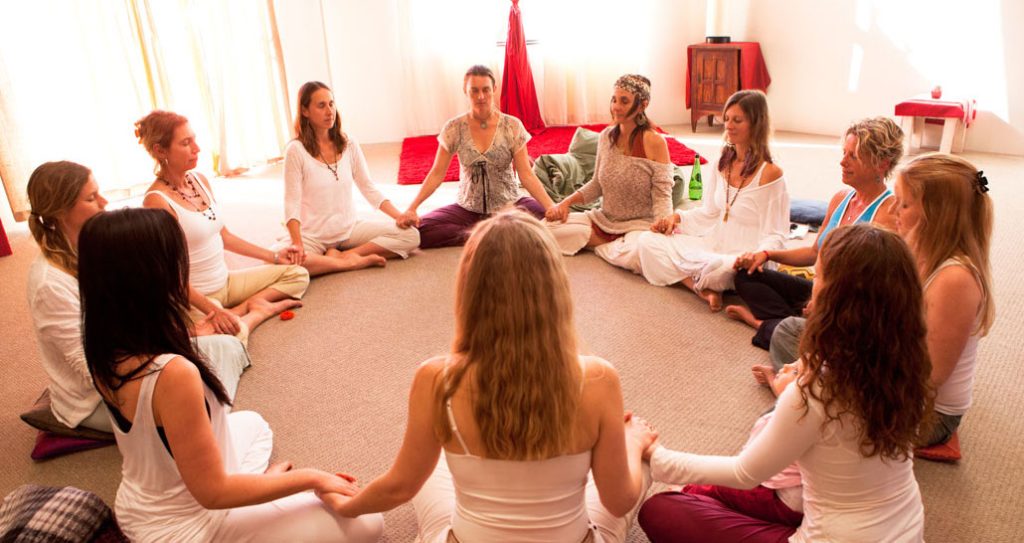
A Red Tent is a nurturing, sacred space that honours & supports women. It can be a space just for yourself at home or for a group of women in a communal place. It is an soft, feminine environment that encourages connection with self & others, healing, rejuvenation and empowerment.
After 15 years of living & breathing the Red Tent philosophy, here are some gems of wisdom that I would like to share with you:
- Understand the Red Tent Concept:
- The Red Tent is inspired by Anita Diamant’s novel “The Red Tent,” symbolising a safe, sacred space for women to gather, share experiences, and support each other. It’s a place for rest, reflection, and connection, often aligning with menstrual cycles and lunar phases.
- This is an ancient tradition in many indigenous cultures, also known as the Moon Hut or Lodge, Women’s TeePee etc.
- Define the Purpose:
- Clearly define the purpose of your Red Tent. It could be a space for your menstrual cycle, for post birth recovery, rest after illness, spiritual growth, emotional support, creative expression, or community building..
- Tailor the activities and environment to reflect this purpose.
- Choose the Right Location:
- Select a quiet, private, and comfortable space.
- If the red tent is for yourself, it could be a dedicated room or corner of room, on an outoord deck or a garden area or in a Tee pee.
- For a communal Red Tent it may be in someone’s home, Tee-pee or a rented venue.
- Ensure it has minimal distractions and is easily accessible for participants.
- Create a Sacred Atmosphere:
- Decorate the space with intention.
- Use soft lighting with candles and low light lamps
- Comfortable seating, such as cushions, rugs and anything soft
- Include natural elements, and meaningful symbols.
- Incorporate fabrics in red and other warm colors to create a cozy, safe & welcoming environment.
- Incorporate Rituals and Traditions… or not
- Introduce rituals that resonate with yourself and/or the participants. These can include opening and closing ceremonies, storytelling, meditation, sharing circles, or creative activities like crafting, journaling or music.
- Or you can chose to keep it simple and simply sit in stillness & BE.
- You may chose to create an alter which is a deeply personal and evolving space, reflecting your unique spiritual journey that features sacred objects such as candles, crystals, sage, bells, photos of teachers or deities, and pieces found in nature such as shells and feathers. An altar embodies the sacredness of everyday life and serves as a bridge between the mundane and the divine.
- Respect Privacy and Confidentiality:
- Foster a culture of trust and confidentiality. Ensure that everything shared within the Red Tent remains private. This helps create a safe environment where women feel comfortable expressing themselves.
- For your own personal red tent – this is an opportunity for you to express your full self openly & honestly, perhaps through journal writing or expressing emotions.
- Emphasise Inclusivity and Respect:
- Create an inclusive space that respects diverse backgrounds, beliefs, and experiences. Encourage open-mindedness and compassion, and ensure that all participants feel valued and heard.
- In your own red tent, this can be a time where you allow all aspects of yourself to express & reveal themselves, through words, sighing, moaning, emotions, singing & music, movement or postures.
- Provide Comfort and Nourishment:
- Offer comfortable seating options like cushions, blankets, and mats. Provide healthy snacks, water, and herbal teas. Consider the sensory experience, including pleasant scents of essential oils and soothing sounds of ambient music or nature.
- This is especially important during menstruation or post birth when women’s bodies are especially sensitive and need deep rest & rejuvenation.
- Plan Activities and Themes:
- Plan activities and themes that align with the interests and needs of the group. These could range from discussions on women’s health, spirituality, and personal growth to creative workshops and relaxation techniques.
- In our own red tent, we may go there to simply meditate, be still or be in silence. Or perhaps this is where we practice yoga, dance, journal, play music, do crafts or brainstorm creative project ideas.
- Acknowledge the Importance of the space. :
- In this busy modern world we live in, our senses are constantly being bombarded by external stimulation, in particular through technology so being in a quiet, calm space can be quite a rare thing.
- When we drop into our safe haven, our usual defenses tend to fall away – leaving us with feelings & emotions that may be closer to the surface than we usually experience in our every day life, such as sadness or anger. If there is old trauma, this may arise too, especially when in a group setting.
- For this reason, a red tent is important for our physical wellbeing & mental health, so that we get to connect deeply with our inner intuitive self and return to our calm, whole and joyful self.
- This way when we come back out into the world we feel centred, reset, grounded, rejuvenated, energised, empowered and inspired for our daily life.
After your sacred time in your “Red Tent” you are able to emerge feeling rested & restored, and ready to give your all to your family, friends, work, life and community.
For more information contact Emma